No Permission Needed: How Niche Communities Are Building Cultural Empires From the Ground Up
There used to be a very specific checklist for cultural legitimacy. You needed a label, a gallery, a network deal, or at minimum a publicist who could get you into the right rooms. The gatekeepers weren't subtle about it either — they sat at the top of tall towers and decided, with remarkable confidence, what the rest of us were allowed to care about.
That system isn't just crumbling. In a lot of spaces, it's already rubble.
Across the country, hyperlocal communities are doing something that would've seemed wildly optimistic ten years ago: they're building entire cultural institutions from scratch, on their own terms, without asking anyone's permission. Ballroom houses in Chicago and Atlanta. Underground theater collectives operating out of converted warehouses in East LA and Detroit. Regional hip-hop scenes in cities that major labels have never once bothered to visit. These aren't fringe experiments. They're fully functioning ecosystems — with their own economies, their own stars, and their own standards of excellence that often put the mainstream to shame.
When the Room Decides What's Real
Here's something the entertainment industry has never quite figured out: trust is actually worth more than reach. You can have a million impressions and zero credibility. But when a community vouches for something — when the people who've been in the room since day one say this is it — that signal travels differently.
Take the ballroom scene. What started decades ago as a survival space for Black and Latinx LGBTQ+ communities has evolved into a full-blown cultural institution with its own language, its own hierarchy, its own performance standards, and its own global audience. Houses like the House of Ninja or the House of Lanvin didn't need a reality TV deal to matter (though mainstream media eventually came crawling). The scene built its own legitimacy through years of actual community investment — mentorship, competition, chosen family, craft. When Pose and Legendary finally showed up, the culture was already fully formed. Hollywood didn't create ballroom. It just finally noticed.
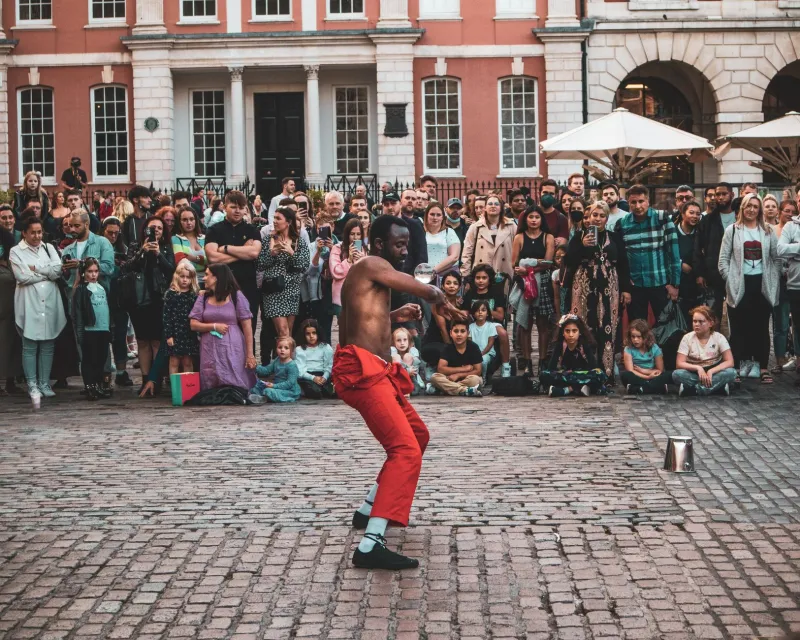
The same dynamic plays out in underground theater. In cities like Philadelphia and Minneapolis, collectives are producing work that addresses housing inequality, immigration, and racial identity with a specificity and emotional honesty that Broadway simply isn't equipped to deliver. They're performing in community centers, parking lots, and living rooms. Ticket prices are sliding scale or pay-what-you-can. The audience isn't abstract — it's the actual neighborhood. And because of that, the work hits different. It's not trying to appeal to everyone. It's trying to speak the truth to someone.
The Economics of Doing It Yourself
Let's talk money, because that's always where the skeptics show up. How do you sustain a cultural movement without corporate backing?
Shorter answer than you'd think: community members fund community projects. Longer answer: it looks like mutual aid fundraisers, Patreon tiers that actually deliver value, local business partnerships, grant writing (yes, that's a skill set these collectives are building internally), merchandise drops, workshops, and ticketed events that keep money circulating within the ecosystem rather than siphoning it upward to shareholders.
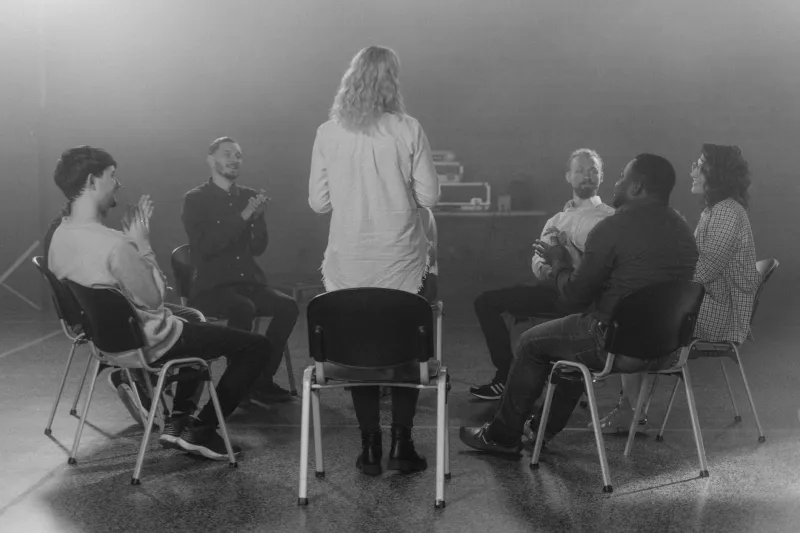
Jazmine Ortega, who co-runs a Latinx theater collective in South Phoenix, puts it plainly: "We stopped waiting for a foundation to tell us our work was fundable. We started asking our community directly — what do you need, and what are you willing to invest in? The answer surprised us. People showed up with $20, $50, their time, their skills. We built a production budget out of that."
This model isn't just scrappy — it's structurally smarter in a lot of ways. When your audience is also your investor, your collaborator, and your neighbor, the relationship is fundamentally different. There's accountability on both sides. The work has to be good because the people who paid for it are sitting right there in the front row.
The Psychology of Belonging (And Why It Beats Hype Every Time)
Mainstream media runs on hype. Niche communities run on belonging. Those are not the same thing, and the difference matters enormously.
Hype is loud, fast, and disposable. It gets you a trending moment and then drops you the second something shinier comes along. Belonging is quieter but it compounds. When someone finds a community that actually sees them — that reflects their specific experience, their humor, their grief, their joy — they don't just consume the culture. They protect it. They recruit for it. They show up for it in ways that no marketing campaign can manufacture.
This is why regional music scenes in places like Houston, New Orleans, and the Pacific Northwest have produced such distinct, durable sounds. It's not just geography. It's the fact that these scenes developed in relationship to actual communities with actual shared experiences. The music means something specific to the people who made it and the people who grew up around it. That specificity, paradoxically, is exactly what makes it resonate beyond the region.
Derek Mouton, a music journalist who's been covering independent scenes in the Gulf South for over a decade, describes it this way: "The scenes that last aren't the ones with the best PR. They're the ones where the artists and the audience genuinely need each other. When that relationship is real, the culture that comes out of it is real. And people can feel the difference."
What Mainstream Media Still Gets Wrong
When major outlets do finally pay attention to these communities, the coverage often misses the point in predictable ways. The story gets flattened into a trend piece. The complexity gets edited out. The community members who've been doing the actual work for years get quoted briefly while the spotlight lands on whoever looks most palatable to a general audience.
It's a dynamic that a lot of community organizers are genuinely tired of. "They want the aesthetic without the history," says Marcus Webb, a co-founder of a Black speculative fiction collective in Atlanta. "They want to write about us like we just appeared. Like there wasn't fifteen years of people showing up to workshops, publishing zines, building a readership one reader at a time. That erasure is part of the story, too."
The good news is that these communities are increasingly documenting their own histories — through podcasts, independent publishing, digital archives, and oral history projects. They're not waiting for the New York Times to write the definitive account. They're writing it themselves.
The Future Belongs to the Specific
If there's a through line here, it's this: the cultural movements that are actually shaping how people think, feel, and see themselves right now are not coming from the top down. They're coming from communities that decided their stories were worth telling and figured out how to tell them without asking for anyone's blessing.
That's not a small thing. In a media landscape that's been obsessed with scale and reach for decades, the insistence on specificity — on making work for this community, in this place, about these experiences — is genuinely radical. It's also, increasingly, what audiences are hungry for.
The gatekeepers didn't disappear because someone tore the gates down. They disappeared because enough communities decided to build somewhere else entirely. And what they built? It's worth paying attention to.