Headphones Off, Hearts Open: The Rise of IRL Music Gatherings Healing Communities From the Inside Out
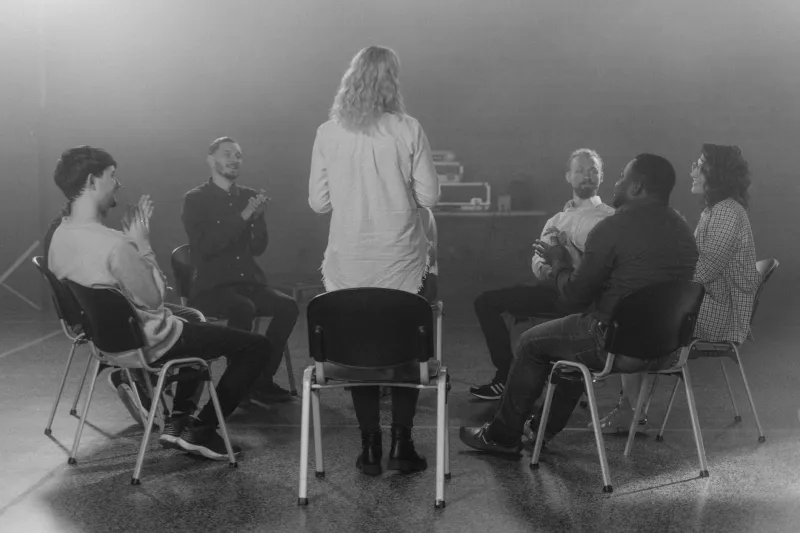
There's a moment that Deja Simmons, a 29-year-old social worker from Atlanta, describes as "the click." It happened during a listening circle held in the back room of a local record shop last spring. About twenty strangers sat in folding chairs arranged in a loose circle, eyes closed, while a vinyl copy of Solange's A Seat at the Table played at a volume that felt almost physical. Nobody spoke. Nobody scrolled. And somewhere in the middle of "Cranes in the Sky," Deja started crying — and realized, through the sound of gentle movement around her, that she wasn't the only one.
"I've listened to that album probably three hundred times," she says. "But that night it hit different. Because I wasn't alone with it."
That distinction — not being alone with it — is exactly what's driving a quiet but powerful movement happening in community centers, yoga studios, bookshops, and living rooms across the country. Call them listening circles, sound baths, grief concerts, or just music nights with intention. Whatever the name, the premise is the same: gather real bodies in real space, let music do its work, and see what happens when people stop consuming sound privately and start experiencing it together.
Why the Playlist Isn't Cutting It Anymore
We've spent the better part of a decade being told that personalized streaming is the future of emotional wellness. Spotify wraps it in pastel graphics. Apple Music calls it "mood." And look — there's nothing wrong with a perfectly curated playlist helping you get through a rough Tuesday commute. But therapists, community organizers, and musicians themselves are starting to name something that data can't quite capture: passive listening, done alone, has a ceiling.
"Music therapy as a field has known this for decades," says Marcus Webb, a board-certified music therapist based in Chicago who now consults for community wellness organizations. "Sound affects the nervous system in measurable ways — heart rate, cortisol levels, brainwave activity. But the social dimension of music? That's where the deeper transformation tends to happen. Humans evolved singing and drumming together. The solo listening experience, historically speaking, is the weird outlier."
Marcus helped design a series of grief-centered listening circles for a South Side Chicago community organization following a cluster of neighborhood losses in 2022. What started as a six-week pilot is now a permanent monthly offering with a waitlist.
"People kept coming back," he says, still sounding a little surprised. "Not because we told them to. Because something happened in that room that they couldn't get anywhere else."
What Actually Goes Down at These Gatherings
The format varies wildly depending on who's organizing and what the community needs. Some circles are highly structured — a facilitator guides participants through themed playlists, with space for sharing between tracks. Others are looser, closer to a listening party with emotional permission built in. Sound baths, which use live instruments like crystal bowls, gongs, and tuning forks, lean more into the physical resonance of sound rather than lyrical content. But across all of them, a few elements tend to show up consistently.
First: phones away, presence required. "That's non-negotiable for us," says Priya Nair, who organizes a monthly listening circle for South Asian women in the Bay Area called Raga & Release. "The whole point is that you're here, in your body, with other people. The moment someone's half-checking Instagram, the container breaks."
Second: intentional curation. These aren't shuffle-mode situations. Organizers spend real time thinking about sonic arc — how to open a space, how to move through emotional terrain, how to close without leaving people raw. Priya describes her process as "building a set list like a journey, not a vibe check."
Third, and maybe most importantly: permission to feel without explanation. "Nobody has to share," says Deja, who has since become a co-organizer of her own circle in Atlanta. "You don't have to explain why a song wrecked you. You just get to be wrecked. And somehow, being wrecked in a room with other people who are also being wrecked makes you feel less broken."
The Community Piece Is the Point
It would be easy to frame this as a wellness trend — another thing to add to the self-care checklist alongside cold plunges and journaling apps. But the people building these spaces are pretty clear that the community dimension isn't incidental. It's the whole deal.
In Detroit, a collective called Frequency House has been hosting what they call "sonic grief circles" specifically for Black men — a demographic that faces enormous social pressure against emotional expression. Organizer Terrell Okafor started it after losing two friends in the same year and finding that traditional support structures weren't built for how he processed pain.
"I needed music. I needed my people. I needed to not have to perform being okay," he says. "So we built that space. And now there are thirty dudes who show up every month who would never have walked into a therapist's office, sitting in a circle, letting music open them up."
That kind of community-specific design is showing up everywhere. There are circles for queer elders navigating loss. Circles for new mothers processing postpartum emotions through lullabies and folk songs. College campus versions popping up as mental health alternatives for Gen Z students skeptical of institutional counseling. Each one shaped by and for the people it serves.
What This Tells Us About How We Actually Heal
The broader cultural signal here is hard to ignore. After years of being told that the right app, the right playlist, the right algorithm could meet our emotional needs, people are voting with their presence for something older and harder to digitize. They're showing up — physically, vulnerably — to be in sound together.
Marcus Webb puts it simply: "We outsourced our emotional lives to our devices. And now we're remembering that healing is actually a collective act."
Deja says she still listens to Solange alone sometimes. Still makes playlists for every mood. But she doesn't confuse that anymore with the thing that happened in that folding chair, in that record shop, surrounded by strangers who cried at the same moment she did.
"That was real," she says. "The algorithm can't give you that. You have to show up for that."
And increasingly, people are.


