Digging in the Crates: Why Reclaiming Your Own Sound Is the Most Radical Thing an Artist Can Do
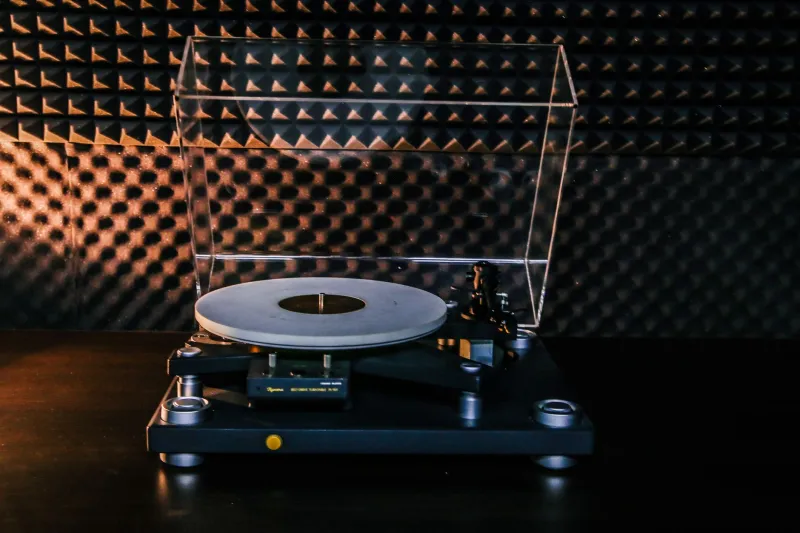
There's a moment in a lot of recording sessions — the kind that happen in home studios lit by LED strips and cluttered with takeout boxes — where a producer drops a needle on something old and the whole room goes quiet. Not because it's unfamiliar. Because it's too familiar. It's a grandmother's record. A church choir from a cassette tape someone's uncle saved. A field recording from a village that no longer exists the way it did when the tape was made.
That silence? That's the beginning of something.
Across the US right now, a generation of artists from marginalized communities — Black, Latino, Indigenous, Asian-American, and more — are doing something that looks simple on the surface but is actually pretty radical: they're sampling themselves. Interpolating their own cultural DNA. Remixing the sounds their communities were told didn't belong in mainstream spaces, and building those sounds into music that is undeniably, defiantly now.
And they're doing it with full intention.
Appropriation vs. Reclamation: There's a Real Difference
Let's get this out of the way, because the conversation about sampling gets messy fast. There's a long, ugly history of cultural sounds being lifted, repackaged, and sold — usually by people outside the originating community, usually without credit, and almost always without any of the money flowing back to the source. Blues into rock and roll. African rhythms into electronic music. Reggaeton rhythms into pop hits that never once mentioned Puerto Rico.
Reclamation is the opposite of that.
When Houston-based producer Solé Jae layers samples from her grandfather's Nigerian highlife records into a trap beat, she's not borrowing — she's inheriting. When LA-based Chicana DJ and producer Xochitl Reyes flips a 1970s cumbia groove into something that bangs in a warehouse rave, she's not being "inspired" by someone else's culture. She is the culture. The difference matters enormously, both ethically and legally.
"People act like sampling is this technical thing, this legal minefield," Reyes told us over the phone from her studio. "But for me it's always been personal first. I'm not pulling from some database. I'm pulling from my tías, my mom's record collection, my quinceañera playlist. That's mine. I'm just finally letting it breathe in a new room."
The Legal Architecture of Owning Your Heritage
Here's where things get genuinely interesting — and complicated. Sampling laws in the US are notoriously thorny. Clearances are expensive, processes are opaque, and the system has historically favored major labels with deep legal pockets. For independent artists, especially those from communities that were never given structural access to begin with, navigating copyright can feel like a system designed to keep them out.
But artists are getting creative. Some are working directly with family members who hold informal ownership of recordings. Others are partnering with cultural archives, universities, and nonprofits to license sounds in ways that keep revenue inside the community. A growing number are leaning into interpolation — rerecording the melodic or rhythmic essence of a source material rather than lifting the original recording — which sidesteps some clearance issues while still honoring the lineage.
New York-based producer and beatmaker Kwame Asante, who works primarily in Afrobeats and highlife-influenced hip-hop, has been deliberate about building what he calls a "community clearance" model with his collaborators. "We're setting up agreements with artists and families before we even start," he explained. "Not just to protect ourselves legally, but because that's the respectful way to do it. If I'm flipping your grandfather's record, your family should see some of that check."
It's an approach that's as much about ethics as economics — and it's slowly building a template that other artists are watching closely.
Archival Sounds as Living Documents
One of the most powerful things about this movement is what it does to history. Archival recordings — field recordings, regional folk music, protest songs, religious chants — have long been treated as museum pieces, things to be preserved behind glass and studied by academics. What these artists are doing is yanking those sounds out of amber and putting them back into conversation with the present.
Detroit-based artist and producer Amara Blue has spent the last three years building what she calls a "sonic genealogy" project, sourcing recordings from the Great Migration era and weaving them into contemporary R&B and electronic compositions. "These sounds were made by people who were surviving something," she said. "And when I put them next to what I'm making today, you can hear the through-line. The joy is the same. The grief is the same. The resilience is the same. That's not coincidence — that's inheritance."
The result isn't just aesthetically compelling. It's communally resonant. When Amara performs her work live, she says the response from Black audiences is visceral. "People cry. Not because it's sad, but because they recognize something. They hear their people in it. That recognition — that's what reclamation actually feels like."
Building Community Through Sound
Beyond the individual artist, this movement is doing something structurally important: it's building networks. Producers are connecting with archivists. Musicians are reaching out to elders. Community organizations are partnering with independent labels to fund projects that might not have commercial viability in the traditional sense but have enormous cultural value.
In Chicago, a collective called Root Frequency has been running workshops that teach young producers — predominantly Black and Latino teens — how to sample ethically, clear sounds legally, and understand the history behind the music they're working with. "We don't want them just flipping a loop," says collective co-founder Marcus Webb. "We want them to know whose loop it is. Once you know that, the music means something different. You're in a conversation, not just making noise."
That sense of conversation — across generations, across geography, across time — is maybe the most underrated part of what's happening here.
Why This Matters Right Now
We're living in a moment where a lot of communities are actively fighting to have their histories acknowledged, their contributions credited, and their futures secured. The music industry, for all its progress, is still a space where the people who create culture are often the last to benefit from it financially.
Artists who are reclaiming and remixing their own cultural sounds are doing something that cuts across all of that. They're asserting ownership — not just legally, but narratively. They're saying: this sound came from us, it belongs to us, and we decide what it becomes next.
That's not just a creative statement. It's a political one. It's an economic one. And honestly? It makes for some of the most interesting music being made in America right now.
The remix, in this context, isn't just a production technique. It's a whole philosophy. It's proof that your culture isn't a relic — it's a resource. And the people who built it deserve to be the ones who profit from it, shape it, and carry it forward.
Dig in your crates. What you find there might just be the most powerful thing you've ever made.