Fury in Four-Four Time: How Today's Artists Are Turning Political Rage Into Music That Actually Moves People

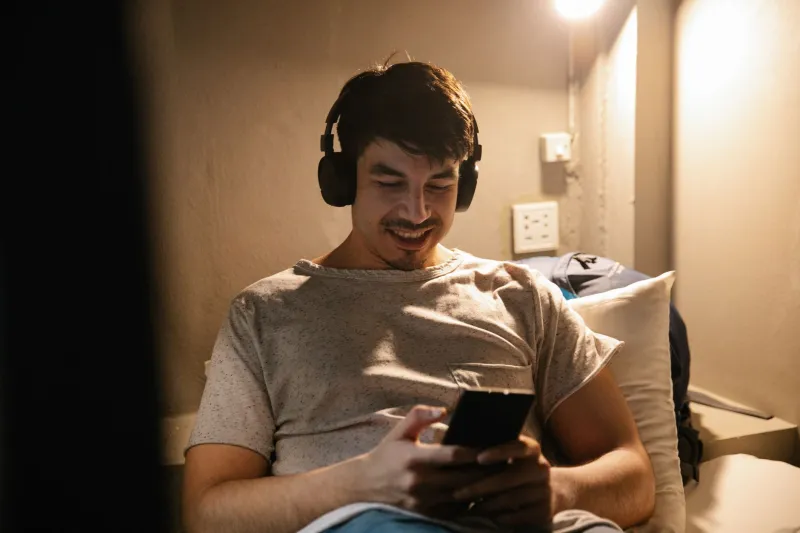
Photo by Photo by Leo_Visions on Unsplash on Unsplash
There's a moment in every protest song where something shifts. The beat drops, the hook lands, and suddenly you're not just hearing someone's frustration — you feel it in your chest like it's your own. That's not an accident. That's craft. And right now, across genres and generations, a wave of artists is working overtime to make sure their political fury doesn't just go viral for 48 hours before the internet moves on to the next thing.
Because here's the real talk: not all protest music is created equal. Some of it lights a fire. Some of it just... burns out.
The Difference Between a Moment and a Movement
Anyone who was online in the summer of 2020 remembers the flood of solidarity posts, the black squares, the reposts. And yes, music was everywhere — some of it genuinely powerful, some of it hollow. Artists who'd never touched anything remotely political were suddenly dropping "awareness" tracks. The audience noticed. And they weren't always impressed.
"People can smell inauthenticity from a mile away," says Nadia Osei, a Houston-based R&B singer-songwriter who's been making politically charged music since her debut EP in 2019. "If you're jumping on a moment because it's trending, that's going to show in the music. The songs that last are the ones that came from somewhere real — from lived experience, from years of carrying something."
That idea — that protest music has to come from a genuine place rather than a strategic one — keeps coming up in conversations with artists across the spectrum. It's not about credentials or suffering Olympics. It's about whether the song has a pulse.
Hip-Hop's Long Game
Hip-hop has always been the most honest genre in America. It's documented poverty, police violence, systemic racism, and the emotional wreckage of being Black in this country long before those conversations were considered mainstream. From Public Enemy to Kendrick Lamar, the genre has a lineage of artists who understood that the most radical thing you can do is tell the truth clearly and make it undeniable.
Chicago rapper and community organizer Dre Malone puts it plainly: "Hip-hop was never supposed to be comfortable for people who don't want to hear it. That's the whole point. We were always making music for the people who already knew what we were talking about — and inviting everyone else to either catch up or step aside."
Malone's recent project, a concept album about gentrification in his South Side neighborhood, didn't blow up on TikTok overnight. But it's been playing in community centers, used in local political campaigns, and sampled in protest videos that have circulated well beyond Chicago. That's the slow burn of music that actually does something.
Indie Rock Finds Its Voice Again
For a while, indie rock seemed to retreat from direct political commentary into a kind of introspective haze. But that's been shifting. Bands like Downtown Riot (a three-piece from Philly) and solo artists like Mara Voss out of Portland are writing songs that are explicitly about policy, about fascism, about the erosion of reproductive rights — and they're not softening the edges.
"I got tired of writing songs that were 'about' things in a way that let listeners decide what they were about," Voss says. "That felt like a cop-out. I wanted to write something that left no room for misinterpretation. And yeah, some people in my audience weren't happy about it. But the people who stayed? They're not just fans anymore — they're collaborators in whatever this is."
That sense of community-building is something a lot of artists bring up. The best protest music doesn't just give people something to feel — it gives them something to do together.
R&B's Quiet Revolution
R&B has always carried grief and joy in equal measure, and right now it's doing something remarkable with political pain. Artists like Amara Solis and the collective Soft Resistance are weaving commentary on voter suppression, immigration, and mental health under capitalism into music that's undeniably gorgeous. The politics don't announce themselves — they arrive slowly, the way the truth often does.
"I don't want people to brace themselves before they hit play," Solis explains. "I want them to be deep in the feeling before they realize what they're actually hearing. That's when it sticks. That's when it becomes theirs."
This is the strategic genius of R&B protest music — it sneaks past defenses that more overtly confrontational music can't. A song about longing can also be a song about displacement. A love song can be a survival song. The double register is the whole point.
What Actually Creates Lasting Change
So what separates the protest track that gets a million streams and disappears from the one that ends up in history books? Artists and cultural critics keep circling back to the same few things.
First: specificity. Songs that name real things — real policies, real places, real people — tend to have more staying power than ones that gesture vaguely at injustice. "We Shall Overcome" worked because it was honest about what needed to be overcome. "This Is America" worked because it was surgically precise about what it was diagnosing.
Second: repetition and community adoption. A protest song becomes an anthem when communities claim it — when it shows up on picket lines, in church basements, at rallies. That adoption can't be manufactured. It has to be earned.
Third: the song has to be good. This sounds obvious, but it's worth saying. Political sincerity doesn't automatically make something listenable. The artists who are genuinely changing the conversation right now are technically skilled, emotionally intelligent, and relentlessly committed to their craft. The message matters AND the music has to hit.
The Responsibility Question
Almost every artist we spoke with brought up responsibility unprompted. The responsibility to get it right, to represent communities they're speaking about or for, to not exploit pain for streaming numbers.
"I think about who's going to hear this song and what it's going to mean to them," says Osei. "Not in a paralyzing way, but in a way that keeps me honest. This isn't just art for art's sake. It's art that exists in a world where real stuff is happening to real people."
That weight — carried thoughtfully rather than fearfully — is part of what makes protest music feel different from other kinds of music. It's made under pressure, for a purpose, by people who understand that songs can do things that speeches and op-eds sometimes can't.
They can make you feel less alone. They can make you angry in a way that moves your feet instead of just your blood pressure. They can turn a private grief into a shared one.
And sometimes — when everything lines up just right — they can change what people believe is possible.
That's not a small thing. That's everything.