Teaching Each Other Everything: How Gen Z Creators Ditched the Gatekeepers and Built Their Own Schools
There's a version of the artist's origin story that gets told over and over again. Some established figure — a professor, a label exec, a gallery owner — sees something in a young creator and extends a hand. A door opens. A career begins. It's a nice story. It's also, for a huge chunk of emerging artists in America right now, basically fiction.
The pipeline from "talented kid" to "working creative" has always had serious cracks in it. Those cracks tend to run deepest for artists who don't already have money, connections, or proximity to the right zip codes. And Gen Z — a generation that came of age watching institutions fail in real time — isn't exactly sitting around waiting for the system to fix itself.
Instead, they built something else entirely.
The Mentor Gap Nobody Wanted to Talk About
Let's be honest about what traditional mentorship actually looked like for most people: expensive, exclusive, and exhausting to access. MFA programs cost a small fortune. Industry internships were often unpaid or underpaid. The "reach out to someone you admire" advice sounded simple but landed differently depending on whether you had a warm intro, a polished portfolio, or just the audacity that comes from never having been told no.
For artists from working-class backgrounds, immigrant families, or communities that were historically locked out of cultural institutions, the mentor shortage wasn't a gap — it was a wall.
But here's what's interesting: that same locked-out generation grew up with tools the previous one didn't have. And they got creative.
Discord Servers Are the New Art School
If you haven't spent time in a serious creative Discord server lately, you're missing something genuinely remarkable. We're not talking about casual fan spaces or meme dumps. We're talking about tightly organized communities where illustrators critique each other's portfolios, producers break down their session files, writers workshop each other's scripts, and photographers share lighting setups in real time.
Some of these servers have tens of thousands of members. Others are deliberately small — capped at a few hundred so relationships stay real. Many operate with structured programming: weekly feedback threads, monthly "office hours" with more experienced members, resource libraries built collaboratively over years.
The learning happening in these spaces is rigorous. It's also radically more accessible than anything a tuition bill can buy.
Creators who've been at it longer show up not as untouchable authorities but as slightly-further-along peers. The power dynamic is flatter. The feedback is faster. And because everyone in the room chose to be there — not because they could afford it, but because they cared — the investment tends to be real.
Skill-Shares, Studio Shares, and the Economics of Mutual Aid
Beyond the digital spaces, something just as meaningful is happening in physical ones. Across cities like Atlanta, Chicago, Los Angeles, and Philadelphia, young artists are pooling resources to create shared studio environments that double as informal learning hubs.
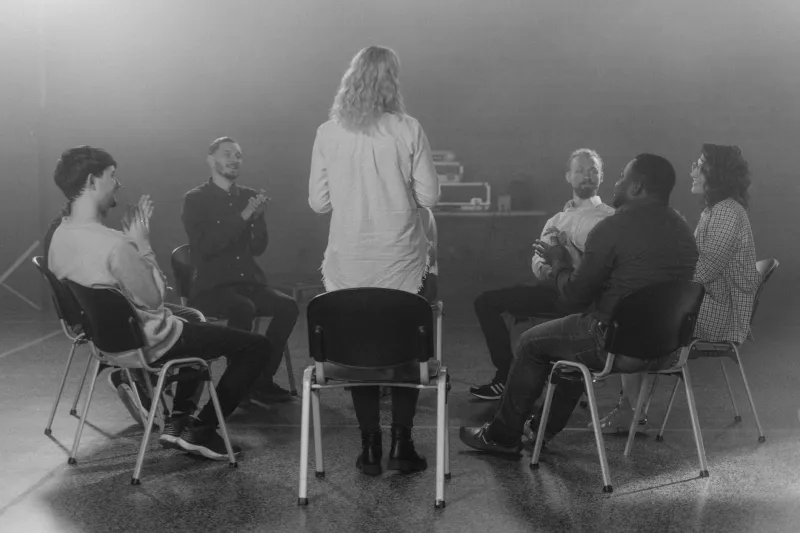
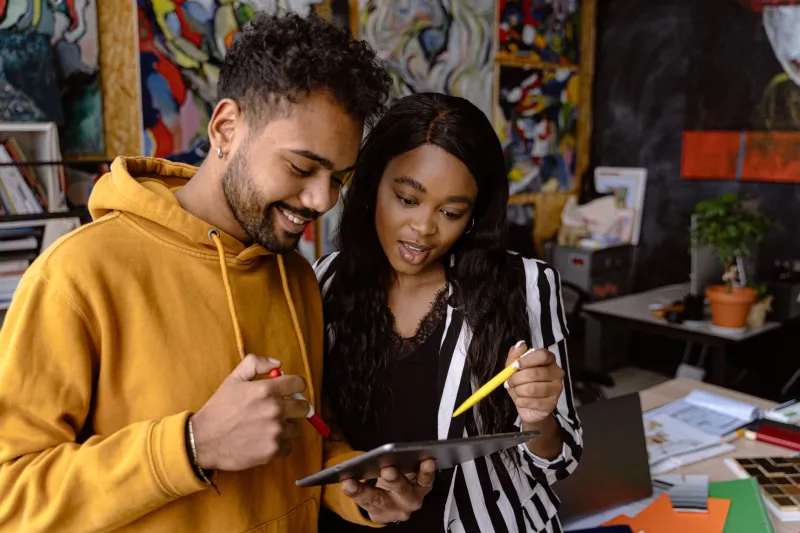
The model varies. Sometimes it's a collective of five or six creatives splitting the cost of a space and agreeing to teach each other what they know — the graphic designer teaching typography, the filmmaker teaching color grading, the musician teaching basic mixing. Sometimes it's a rotating skill-share series open to the broader community, held in whatever venue will have them.
What these arrangements have in common is an explicit rejection of scarcity thinking. The old model told artists to guard their techniques, protect their contacts, compete for limited spots at the table. The new model says: the more people in this room know how to do what I do, the stronger all of us get.
That's not naïveté. That's a calculated bet on collective power.
Accountability Structures Nobody Taught Them to Build
One thing traditional mentorships did provide — even imperfectly — was accountability. Someone checking in. Someone who'd notice if you went quiet for three months. Someone whose opinion you cared enough about to actually finish the thing.
Peer networks have had to engineer that from scratch, and honestly? Some of them have gotten pretty good at it.
Creative accountability partnerships — where two or more artists commit to regular check-ins, share works-in-progress, and hold each other to self-set deadlines — have become a genuine subculture. There are apps built specifically for this now. There are subreddits, group chats, and even paid subscription communities where the whole value proposition is structured peer accountability.
The relationships that form inside these structures often go deeper than anything a formal mentorship might produce. When your accountability partner has seen every messy draft, every abandoned project, every 2am voice note about whether you're actually any good at this — that's not a professional contact. That's something closer to family.
What Gets Passed Down When Peers Lead
Here's something worth sitting with: when artists learn from each other rather than from gatekeeping institutions, what gets transmitted is different.
Traditional mentorship often came bundled with a particular aesthetic, a particular industry worldview, a particular set of assumptions about what success looks like and who it's for. Peer-to-peer learning, by contrast, tends to be messier, more pluralistic, and way more willing to question those assumptions out loud.
You're less likely to be told "this is how things work" and more likely to be asked "wait, why does it have to work that way?" That's not a small thing. That's the difference between reproducing a culture and actually building a new one.
The artists coming up through these peer networks aren't just learning techniques. They're developing a different relationship to the creative industry itself — one that's more skeptical of gatekeepers, more committed to community, and more comfortable with the idea that the rules were written by people with specific interests, and can therefore be rewritten.
This Isn't a Workaround. It's the Point.
It would be easy to frame peer mentorship as a stopgap — something young artists do while waiting for the real mentors to show up. But spend any time inside these communities and that framing falls apart fast.
The people building these networks aren't settling. They're choosing. They're choosing relationships built on mutual respect over hierarchies built on access. They're choosing learning environments where their full identity doesn't have to be translated or minimized to fit the room. They're choosing to build something that belongs to everyone in it.
The mentor shortage is real. The institutions that were supposed to close it mostly haven't. But the generation that grew up in that gap didn't just survive it — they turned it into an entirely different way of doing things.
And honestly? It looks a lot more like what art was always supposed to be.