Own Your Masters: How BIPOC Artists Are Rewriting the Rules of Who Gets Paid
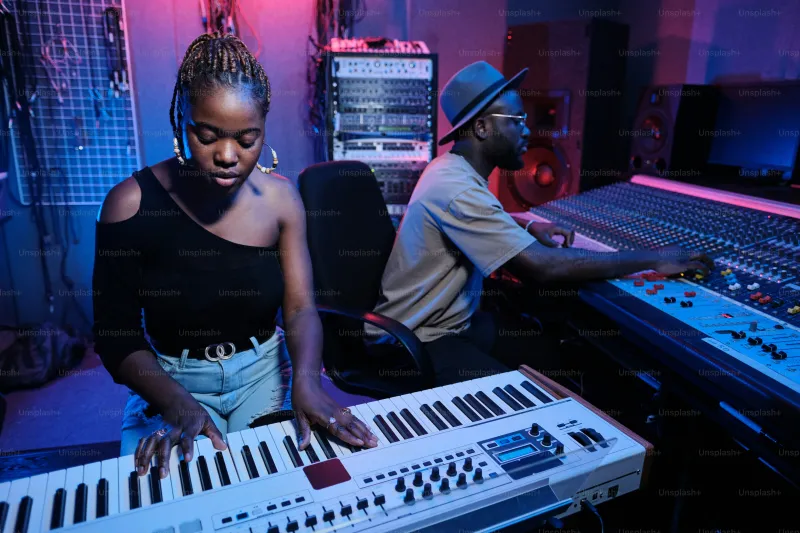
Photo: independent Black musician recording studio creative ownership, via plus.unsplash.com
The history of American music is, in a lot of ways, a history of extraction. Blues, jazz, rock and roll, hip-hop, R&B — genre after genre built by Black artists, borrowed by the industry, and monetized by people who didn't make it. The names at the top of the charts changed. The people cashing the biggest checks often didn't.
That story is being rewritten right now, in real time, by a wave of BIPOC musicians who have decided they're done handing over the keys to their own creative houses.
The Old Deal Was Never Fair
To understand why this moment matters, you have to understand how broken the traditional record label system was — and in many cases, still is — for artists who weren't starting from a position of power.
For decades, the standard major label contract offered an advance (essentially a loan) in exchange for signing away master recordings, creative control, and a chunk of royalties that could take years to see — if they arrived at all. Artists were expected to be grateful. Many were so desperate for a shot at visibility that they signed without fully understanding what they were giving up.
For Black artists in particular, this wasn't just bad business. It was a continuation of a pattern. From the early rock era when white artists covered Black musicians' songs and collected the radio royalties, to the hip-hop golden age when producers and MCs built empires that the labels quietly owned the foundations of — the industry had a long-running habit of letting BIPOC artists be the face while being the hand.
Taylor Swift's very public battle to reclaim her masters made headlines and sparked a national conversation. But artists of color had been fighting that same battle in obscurity for generations, with far less leverage and far less press coverage.
The Independent Pipeline Changes Everything
Here's what's different now: the infrastructure required to make, distribute, and monetize music no longer requires a label's permission.
Distribution platforms like DistroKid, TuneCore, and United Masters have made it possible for an independent artist to get their music onto every major streaming service — Spotify, Apple Music, Tidal — without signing away their rights. United Masters, notably, was founded specifically with artists of color in mind and has been explicit about its mission to shift power dynamics in the industry.
Producers who once had to hustle for label placements are now building their own imprints. Artists who might have been dropped after one album are building direct relationships with fans through Bandcamp, Patreon, and Substack — platforms where the revenue split actually favors the creator. When you sell a vinyl run through Bandcamp, you keep the overwhelming majority of that money. When you build a Patreon where fans pay monthly for early releases and behind-the-scenes content, you own that relationship entirely.
This isn't a side hustle model anymore. It's a legitimate career architecture.
Sampling, Ownership, and the Fight Over Sound
Sampling has always been central to Black music-making — it's a creative tradition rooted in call-and-response, in remix culture, in the idea that music is a living conversation across time. Hip-hop built an entire aesthetic universe out of it. So did electronic music, dancehall, Afrobeats, and dozens of other genres with deep roots in communities of color.
The legal framework around sampling, though, was largely written by and for the people who owned the original recordings — which, historically, was rarely the artists themselves. Clearance costs can be prohibitive for independent artists, and the threat of litigation has pushed some creators away from sample-based work entirely or forced them into deals that undercut their profits.
A growing number of artists and producers are pushing back by prioritizing ownership of their own source material from the jump. If you own your masters, your samples are yours to clear — or to decline to clear — on your own terms. Producers like Kaytranada, Sango, and a new generation of beatmakers working in Afrobeats, Jersey Club, and hyperpop-adjacent spaces are building catalogs they fully control, creating leverage that previous generations simply didn't have.
There's also a growing movement toward creating original sample packs and licensing them directly, cutting out the middlemen and building passive income streams that accumulate over time.
NFTs, Web3, and the Promise (and Limits) of New Tech
A few years ago, NFTs were everywhere in the music conversation, pitched as the technology that would finally let artists own their work and connect directly with fans. The hype has cooled considerably — and the crypto market's volatility took a lot of early NFT projects down with it — but the underlying impulse wasn't wrong.
Some BIPOC artists found genuine value in the NFT moment. Producers and electronic artists who built early communities around Web3 platforms were able to generate significant revenue from direct sales, bypassing streaming royalties entirely. For artists whose music doesn't fit neatly into algorithmic playlists — experimental, genre-blending, or rooted in specific cultural traditions — the ability to sell directly to a committed audience of a few hundred people can be more financially sustainable than chasing millions of streams.
The lesson from the NFT era isn't that the technology was the answer. It's that the principle — artists owning their work and transacting directly with the people who value it — is one worth building toward through whatever tools actually stick.
Artists Building the Blueprint
Across genres and regions, BIPOC artists are constructing careers that look nothing like the old model. Independent R&B artists are releasing music on their own terms and selling out intimate tours without a single label push. Latinx producers are building studios in their communities and keeping the publishing. Indigenous musicians are using platforms to share traditional sounds with global audiences while maintaining cultural ownership and context.
What ties these stories together isn't a single strategy. It's a shared refusal — the refusal to accept that creativity and control are mutually exclusive, that the price of being heard is giving up the right to profit from what you've made.
The Bigger Picture
When BIPOC artists own their masters, they're not just securing their own financial futures. They're building generational wealth in communities that have historically been locked out of it. They're creating models for the artists who come after them. They're demonstrating, with receipts, that the old gatekeeping infrastructure was never a necessity — it was a choice made by people who benefited from it.
The music industry is not going to transform overnight. The major labels still have enormous power, and the streaming economy still concentrates money at the top in ways that disadvantage independent artists across the board. There's real work left to do on royalty reform, on equitable algorithmic visibility, on the structural racism baked into how radio, press, and playlisting still operate.
But the artists leading this charge aren't waiting for the industry to fix itself. They're building around it, through it, and in spite of it — and they're keeping what they make.
That's not just good business. That's a whole new kind of music history being written.