Stop Explaining Yourself: The BIPOC Comedy Revolution That's Done Translating for the Room
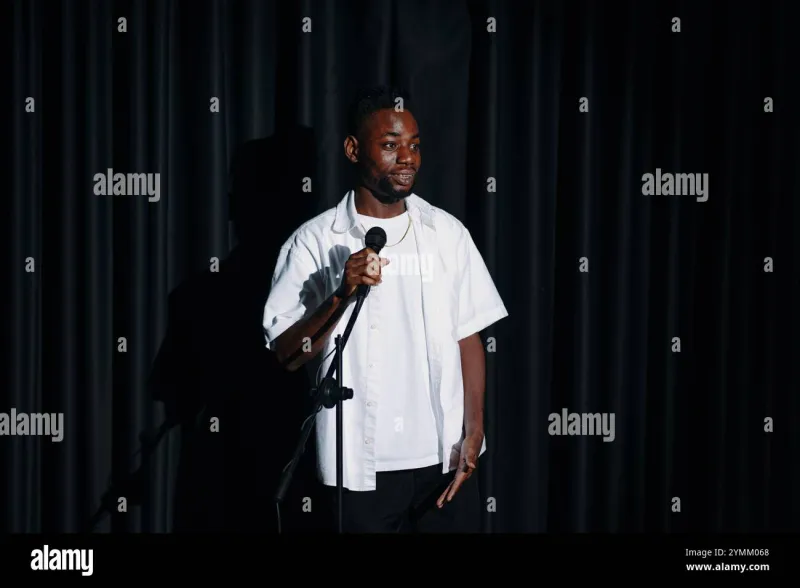
Photo: diverse comedian performing stand-up comedy on stage spotlight microphone, via c8.alamy.com
The Old Deal Is Dead
There used to be a formula. If you were a comedian of color working your way up through American clubs in the '90s and 2000s, you learned it fast: open with something universal, sprinkle in just enough cultural flavor to seem "authentic," but never — never — let the specificity get so deep that the majority of the room feels left out.
The unspoken audience you were always writing for? White, mainstream, and assumed to be the default arbiter of what was "broadly relatable."
That era is over. And the comedians burying it are having the time of their lives doing it.
Fluency Not Required
When Ziwe Fumudoh built her talk show Ziwe on Showtime, she didn't bother with a welcome mat. Her comedy assumes you already know the cultural and political context — and if you don't, catching up is your problem. When Hasan Minhaj digs into South Asian immigrant family dynamics in The King's Jester, he's not stopping to define terms. When Quinta Brunson writes Abbott Elementary, the specificity of Black Philadelphia is the point, not the backdrop.
This isn't accidental. It's a deliberate artistic and political choice.
"I spent years being told my references were 'too niche,'" says comedian and writer Valentina Cruz, a Mexican-American performer who's been working the Chicago and LA club circuits for nearly a decade. "Too niche for who? I was doing a bit about my tía's specific energy at quinceañeras and the Latinas in the audience were screaming. The bit wasn't too niche. The room was just too narrow."
Cruz, whose debut hour special is currently in development, represents a wave of BIPOC comedians who are done calibrating their art to the comfort level of audiences who were never really their people to begin with.
TikTok Rewrote the Audience
The platform shift has been enormous in enabling this change. Before TikTok and YouTube democratized comedy distribution, a comedian's career was largely gatekept by club bookers, late-night producers, and network executives — a pipeline that historically rewarded "crossover appeal," which was often just a polite way of saying "palatable to white audiences."
Now? A 60-second video that goes deep on a very specific cultural experience can reach exactly the people who recognize it — and reach millions of them. The algorithm doesn't care about crossover. It cares about resonance.
Jordan Mendoza, a Filipino-American comedian based in New York with over 800,000 TikTok followers, built his entire audience on hyper-specific jokes about Filipino family culture that he never expected to travel far. "I made a bit about the specific way Filipino aunties communicate disapproval without ever saying anything directly," he says, laughing. "I thought maybe my cousins would share it. It got 4 million views. Turns out specificity is universal — people recognize the feeling even when they don't know the exact cultural context."
This is the paradox that the old gatekeepers never understood: the more specific the comedy, the more emotionally true it often is — and emotional truth transcends demographic lines even when cultural references don't.
Netflix and the Streaming Special Boom
Streaming has also cracked open what a comedy special can be. Netflix's investment in BIPOC comedians over the past five years — from Ali Wong's boundary-obliterating specials to Wanda Sykes' I'm an Entertainer to Dave Chappelle's complicated legacy — has created space for voices that would have struggled to land a Comedy Central deal in 2005.
More importantly, streaming audiences self-select. You're not a comedian performing for whoever wandered into a club on a Tuesday night. You're performing for people who actively chose to watch you. That changes the entire dynamic of who you're writing for.
"When I write now, I'm writing for my people first," says comedian Amara Osei, a Ghanaian-American performer whose debut special premiered on a major streaming platform earlier this year. "Not exclusively — I want everyone to come to the party. But I'm not adjusting the music to make sure everyone's comfortable. This is the music. Come dance or don't."
The Code-Switch Tax
What often goes undiscussed in conversations about BIPOC comedy is the sheer labor of the old model — what many performers describe as the code-switch tax. The mental and creative energy spent constantly translating yourself, softening edges, pre-emptively explaining context — that's energy that isn't going into actually making the work better.
"Code-switching in comedy is exhausting in a way that's hard to explain to people who've never had to do it," Cruz says. "You're not just performing. You're also simultaneously managing white discomfort, anticipating the joke that might 'go too far,' and doing a whole internal calculation about what you can and can't say. That's three jobs at once."
The comedians thriving right now are largely the ones who've stopped paying that tax. And the work is sharper for it.
Reshaping the Club Circuit
This shift isn't just happening on streaming platforms and social media. Comedy club lineups across the country — particularly in cities like New York, LA, Chicago, Houston, and Atlanta — are changing in real time. Clubs that want to stay culturally relevant are actively booking BIPOC headliners and building nights specifically designed around specific community audiences.
It's both an artistic evolution and a business one. The audiences showing up for these shows aren't the same demographics that filled comedy clubs in the 1990s. America is changing. The comedy that reflects it is changing too.
"The rooms are different now," Mendoza says. "I did a show last month in Queens and the crowd was Filipino, Black, Dominican, Korean — it was New York in the most New York way possible. And every single person in that room was laughing at things that would have been considered 'too specific' five years ago. Because they got it. That's the room I always wanted to perform for."
The Punchline
The most exciting thing about this moment in American comedy isn't just that BIPOC comedians are getting more opportunities — though that matters enormously. It's that the entire definition of "relatable" is being renegotiated in real time.
Relatability was never really a neutral term. It was always a coded way of asking: does this land for the assumed mainstream? What this generation of comedians is proving, night after night and scroll after scroll, is that the mainstream was always a fiction. America has always been a room full of wildly specific, deeply particular, beautifully complicated people.
The comedy that honors that specificity? That's not niche. That's finally just honest.
And honestly? It's way funnier.