From Bedroom to Brand: How DIY Creators Are Blowing Up the Old Rules of 'Making It'
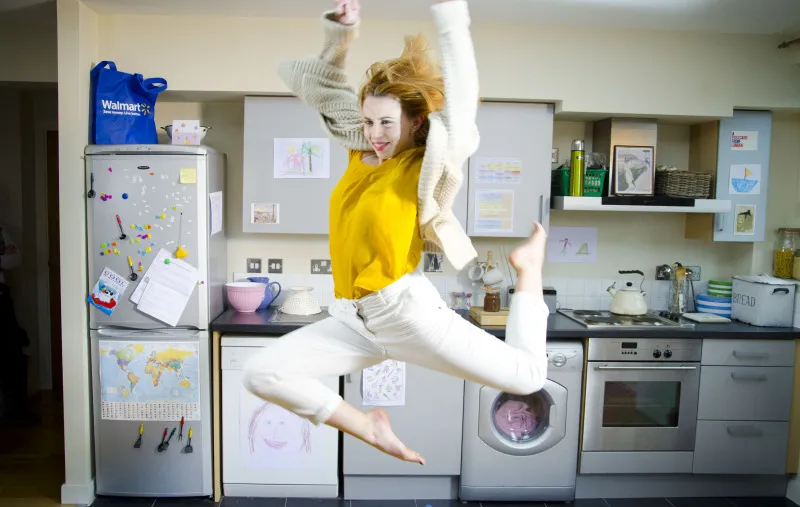
Photo: Bold Content, CC BY 2.0, via Wikimedia Commons
There used to be a very specific path to becoming a professional dancer, musician, or performer in America. You trained for years, maybe decades. You auditioned — and got rejected — over and over again. You moved to New York or LA, waited tables, and hoped someone with a clipboard and industry connections would finally notice you. That path still exists. But it's no longer the only one.
Today, a 19-year-old in Columbus, Ohio can choreograph a routine in her childhood bedroom, post it on TikTok at 11 p.m., and wake up to 2 million views and a brand partnership offer in her DMs. No agent. No audition. No velvet rope. Just a phone, a decent internet connection, and the audacity to hit upload.
So what does it actually mean to be a "professional" artist in 2024? That question is getting more complicated — and more interesting — by the day.
The Economics of the Bedroom Studio
Let's talk money, because that's where this conversation gets real. The creator economy is now estimated to be worth over $250 billion globally, and a significant chunk of that is flowing directly into the hands of independent artists who never set foot in a traditional entertainment industry office.
For dancers specifically, the shift has been seismic. Choreographers who once would have spent years grinding through music video gigs and Broadway callbacks are now building audiences — and incomes — through TikTok, YouTube Shorts, and Instagram Reels. Brand deals with athletic wear companies, online masterclass subscriptions, and Patreon memberships are replacing the old paycheck structures entirely.
Take someone like Keara Wilson, who choreographed the "Savage" dance that became one of TikTok's most replicated trends. Or the dozens of lesser-known creators who've quietly built six-figure businesses teaching their signature styles through platforms like Teachable or even just a paid Discord server. These aren't side hustles anymore. This is the job.
Music production has followed the same arc. Bedroom producers — many of them self-taught, many of them teenagers — are placing beats with major label artists, releasing their own projects independently, and keeping a far larger percentage of their revenue than any traditional record deal would have ever allowed. The tools are cheaper, the distribution is democratized, and the middlemen are increasingly optional.
What the Old Guard Gets Wrong
Here's where it gets a little spicy. The entertainment establishment has not exactly embraced this shift with open arms. There's a persistent narrative — often voiced by industry veterans — that bedroom creators are somehow producing lesser art. That without formal training, without the "right" experience, what they're making isn't truly professional.
That argument is worth examining, but it's also worth calling out for what it often is: gatekeeping dressed up as quality control.
Yes, there are things that formal training offers — technical depth, collaborative discipline, exposure to a broader artistic vocabulary. Nobody's pretending a six-week online dance course is equivalent to four years at a conservatory. But the assumption that only institutionally validated artists deserve to be taken seriously? That's a bias, and it's one that has historically kept working-class creators, creators of color, and creators outside major coastal cities from accessing the industry at all.
The bedroom studio doesn't just lower the barrier to entry. It fundamentally changes who gets to enter.
The Mental Health Reality Nobody Wants to Post About
But here's the part that doesn't make it into the highlight reel: building a career from your bedroom is genuinely hard in ways that go beyond learning a new skill set.
When your home is also your studio, your office, and your content factory, the boundaries between rest and work dissolve fast. Creators talk about the pressure to post consistently — not because they want to, but because the algorithm punishes silence. A week without content can tank months of growth. That's not creative freedom. That's a different kind of treadmill.
Burnout is rampant in the creator space, and it hits differently when your personal identity is so deeply entangled with your output. For dancers especially, whose bodies are the instrument, the pressure to look good, move perfectly, and perform with energy on camera every single day carries a physical and emotional toll that the "work from anywhere" aesthetic glosses over completely.
There's also the isolation. Working alone, in your room, without colleagues or collaborators in physical proximity, can quietly chip away at your sense of connection and purpose — even when your follower count is climbing. We'll come back to that particular irony in a minute.
What We've Gained (And What We've Given Up)
The democratization of artistry is genuinely exciting. It means more voices, more styles, more stories. It means a Black teenage dancer in Atlanta can influence global choreography trends without ever needing a Hollywood agent to cosign her talent. It means a queer producer in rural Texas can find his audience without relocating to a city where he might not feel safe.
That's not a small thing. That's actually a massive cultural shift, and it deserves to be celebrated.
What's murkier is what we lose when art-making becomes so thoroughly individualized. Collaboration — real, in-person, messy, generative collaboration — produces something that solo content creation often can't replicate. The spontaneous energy of a rehearsal room, the friction of working with other artists who challenge your instincts, the shared experience of performing live for a physical audience: these things shape artists in ways that a ring light and a comment section simply can't.
The best version of this cultural moment isn't bedroom studios replacing traditional artistic ecosystems — it's both existing, cross-pollinating, and making each other better.
The Vibe Check on 'Professional'
So back to the original question. What does professional mean now?
Maybe it means showing up consistently for your audience. Maybe it means being paid for your work, on your own terms. Maybe it means mastering your craft — whether you learned it in a studio or from YouTube tutorials at 2 a.m. — and sharing it in a way that genuinely moves people.
The old gatekeepers didn't define quality. They defined access. And access, finally, is starting to look a little different.
The bedroom studio renaissance isn't perfect. It comes with burnout, isolation, and a new set of pressures that the industry hasn't figured out how to support yet. But it's also producing real art, real careers, and real cultural impact — and that's worth taking seriously, no matter where it was made.